


Enabling more selective, reliable and data-aware RAIN RFID interactions.
Edition 4 gives compatible RAIN RFID systems more control over which tags participate in an inventory round, how fringe-tag responses are handled and how variable tag data is accessed.
ISO/IEC 18000-63:2026, Edition 4, was published on 30 October 2026 and replaces the 2021 edition of the international air-interface standard for passive UHF RFID systems operating in the 860 MHz to 930 MHz range.
The update is technically significant, but its operational value is easier to express: it can help compatible systems interact more selectively with the tag population and retrieve the data an application needs with greater flexibility.
What does ISO/IEC 18000-63:2026 Edition 4 enable?
Edition 4 introduces protocol capabilities that can help compatible readers and tags select intended tag populations earlier, reduce the effect of partially energised tags at the edge of a read zone and access variable amounts of data from TID and User memory. These capabilities can reduce avoidable air-interface activity and give solution architects more control over what is handled by the reader, edge and application layers.
Realising those benefits will depend on support in reader software or firmware, compatible tag ICs, deliberate solution design and testing under operating conditions.
Why does the RAIN RFID air interface need to evolve?
RAIN RFID deployments are expanding beyond isolated read points. A single facility may contain fixed readers, portals, handheld devices, checkout systems and automated identification zones serving different workflows.
That growth creates three practical challenges:
Existing deployments address these conditions through antenna placement, power configuration, zone engineering, process separation and software filtering. Those disciplines remain essential. Edition 4 adds more control within the standardised communication between the reader and the tag, allowing some decisions to be made earlier in the interaction.
Three protocol changes with operational consequences
Narrower tag populations at the start of inventory
QueryX and QueryY allow compatible readers to apply user-defined filtering criteria while an inventory round is being initialised.
In many current workflows, a reader captures a broad population of tag responses and the edge or application layer then determines which reads are relevant. That approach remains valid, but it can create avoidable RF activity and downstream processing when several tagged populations are present in the same environment.
With QueryX and QueryY, compatible tags can be evaluated against defined criteria before participating in the inventory round. The material difference is that selection can begin at the air interface rather than only after tag responses have entered the application workflow.
For solution providers, this creates another design option for controlling tag clutter. For customers, the potential outcome is a more focused inventory process in which the system spends more of its time interacting with tags relevant to the intended operation.
This capability is particularly relevant where multiple RFID-enabled processes operate in proximity, such as inventory, checkout and loss-prevention workflows in retail or adjacent movement and verification zones in a warehouse or manufacturing facility.
Less disruption from fringe tags
Passive RAIN RFID tags rely on energy supplied by the reader. A tag near the edge of a read zone may receive enough energy to start responding but not enough to complete its response consistently.
Edition 4 adds protocol behaviour intended to reduce the effect of these fringe-tag interactions. GS1 describes the corresponding Gen2v3 enhancement as enabling readers to disregard responses from tags that cannot complete them before running out of power.
The potential benefit is more consistent inventory behaviour, with fewer incomplete interactions affecting read-rate performance. This can be valuable in dense or difficult RF environments where marginal tag participation creates retries or variability.
It does not remove the need for sound read-point engineering. Antenna placement, transmit power, tag orientation, surrounding materials and environmental testing remain decisive. The protocol enhancement adds another mechanism for managing a known operating condition; it is not a substitute for RF design.
More flexible access to TID and User-memory data
Many RFID applications primarily retrieve an EPC or another identifier. Some use cases, however, also require information held in TID or User memory.
Edition 4 includes ReadVar and the Read-User-Memory indicator, or RUM. In the corresponding GS1 Gen2v3 specification, ReadVar allows a compatible reader to request part or all of a tag’s TID memory or File_0 in User memory, while the response indicates the amount of data returned and whether more is available. RUM provides signalling related to the availability of relevant User-memory data.
This is useful because applications do not always know in advance how much data a tag can return. More flexible discovery and retrieval can reduce reliance on fixed memory assumptions and support use cases that need selected on-tag information beyond the primary identifier.
The practical value will still depend on the tag IC, memory configuration, data model and application architecture. Edition 4 provides a standardised mechanism; it does not determine what data should be stored on a tag or how the enterprise should use it.

The larger shift: from broad capture to intentional interaction
The most important consequence of Edition 4 is not any single command. It is the possibility of changing where certain decisions are made.
In a conventional workflow, a reader may collect a broad set of responses before edge or enterprise software filters, validates and interprets them. Edition 4 allows compatible systems to move part of that selectivity closer to the air interface:
- Which tag population should participate in this inventory round?
- Is a tag sufficiently powered to complete the required interaction?
- What amount or type of on-tag data should be retrieved?
This does not eliminate the edge or application layer. Those layers remain responsible for operational context: determining where an event occurred, validating movement, removing duplicates, correlating events, identifying exceptions and triggering business workflows.
Instead, Edition 4 can support a clearer division of work. The air interface can become more selective about participation and data retrieval, while the edge and enterprise layers continue to determine what those events mean for the operation.
That distinction matters as RFID environments become denser and more persistent. When more tagged populations, readers and workflows share the same facility, reducing unnecessary interaction earlier can help limit downstream noise and make the resulting event stream more purposeful.
How is Edition 4 related to Gen2v3?
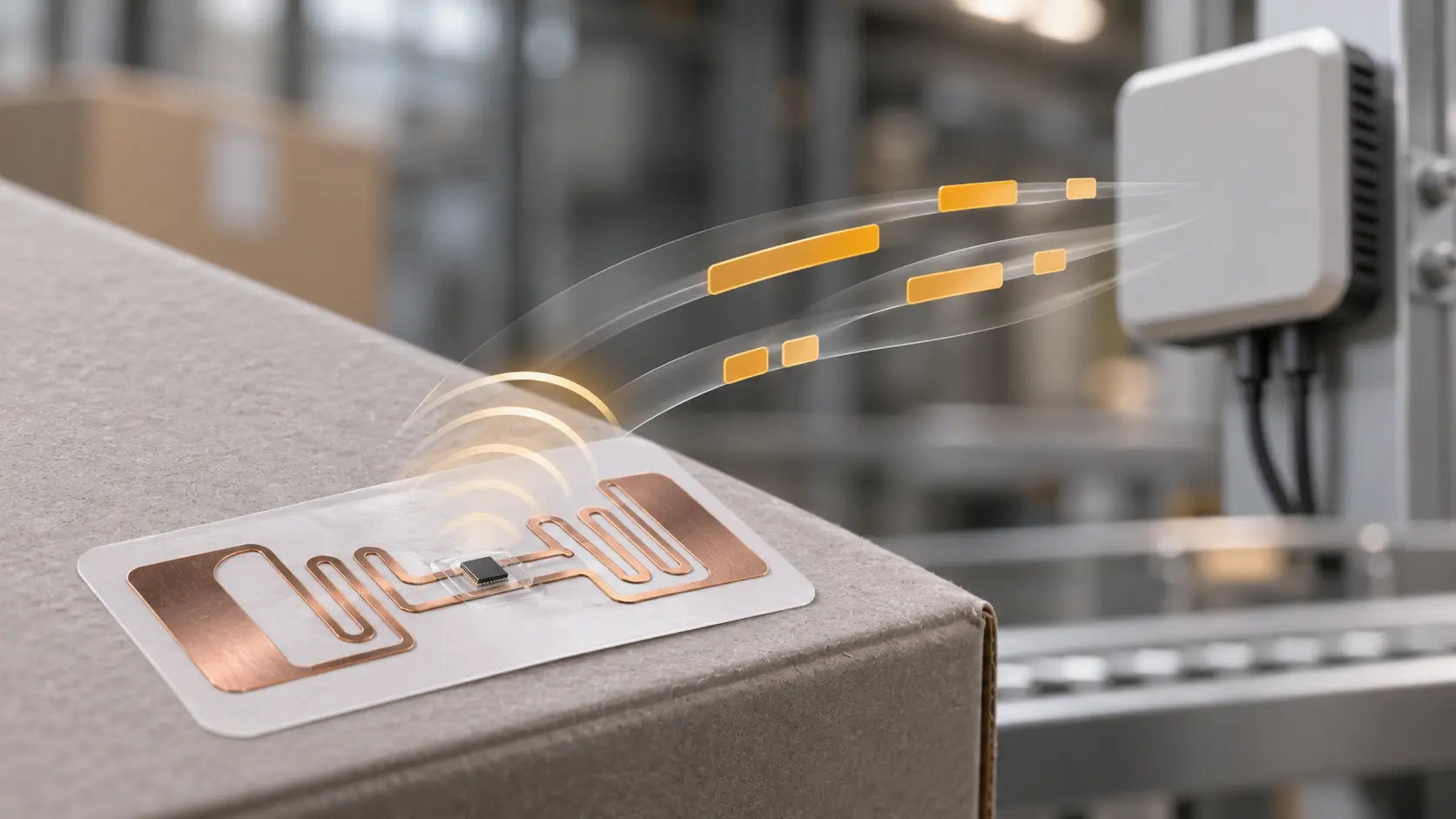
ISO/IEC 18000-63 and the GS1 EPC Gen2 standard are closely aligned specifications for the RAIN RFID air interface. QueryX, QueryY and ReadVar appear in GS1’s Gen2v3 specification and in the new ISO/IEC edition.
Although the specifications are closely aligned, the two terms should not be used interchangeably: ISO/IEC 18000-63:2026 is Edition 4 of the international standard, while Gen2v3 refers to the latest major generation of the GS1 EPC air-interface specification.
GS1 states that Gen2v3 is backward compatible with Gen2v2. Existing deployments can therefore continue to operate, while use of the new capabilities will depend on compatible readers, tag chips and implementation choices.
Adoption will be gradual and use-case led
The focus now shifts from defining the standard to supporting it across readers, tag ICs and real-world deployments. It does not create an immediate replacement cycle for existing infrastructure.
Reader manufacturers will need to support the relevant commands and procedures. Tag-chip providers will need compatible implementations. Solution providers will need to decide where the new features solve a real operational problem and then validate their behaviour in mixed-generation environments.
The earliest value is likely to appear in deployments with:
- High tag density or persistent autonomous reading
- Unwanted or overlapping tag populations
- Several reader applications operating in proximity
- Variable read-zone conditions and fringe-tag behaviour
- A requirement to retrieve variable TID or User-memory data
For each candidate use case, the useful question is not simply whether Edition 4 is supported. It is whether using a new capability improves the intended workflow enough to justify changes to tag selection, reader configuration, application logic and test coverage.

What should solution providers validate?
A practical Edition 4 assessment should cover five areas:
- Reader support: Which commands are supported, and does enablement require new hardware, firmware or software?
- Tag IC support: Which tag populations support the required feature, and how will mixed generations behave?
- Architecture: Which selection and data-access functions should occur at the air interface, and which should remain at the edge or application layer?
- Interoperability: Does the intended behaviour remain consistent across the selected readers, tag ICs and operating conditions?
- Operational evidence: Does the feature measurably reduce tag clutter, fringe-tag disruption or data-access complexity in the target workflow?
This last step is essential. Protocol capability becomes business value only when it improves the reliability, relevance or efficiency of a real process.
From reading every response to requesting what the operation needs
ISO/IEC 18000-63:2026 expands the design choices available to the market while preserving the importance of robust RF engineering and application-level validation. Compatible systems can become more deliberate about which tags participate, whether they can complete an interaction and what data is retrieved. In dense, multi-reader or data-rich environments, that earlier control could reduce avoidable activity before it becomes downstream processing noise.
The long-term significance of Edition 4 may therefore lie in a shift from reading every tag that responds to interacting more intelligently with the tags and data that the operation actually needs.
References
FAQs
What is ISO/IEC 18000-63:2026?
ISO/IEC 18000-63:2026 is Edition 4 of the international air-interface standard for passive backscatter RFID systems operating in the 860 MHz to 930 MHz range. It defines physical interactions, protocol commands and collision-arbitration behaviour between readers and tags.
Does Edition 4 require existing RFID infrastructure to be replaced?
No immediate replacement is implied. Existing deployments can continue operating. Access to the new capabilities will depend on support from the reader, tag IC and solution implementation, so adoption is expected to be gradual.
Which RAIN RFID deployments are most likely to benefit first?
The strongest early candidates are high-density, multi-reader and autonomous-reading environments; sites with overlapping tag populations or fringe-tag variability; and applications that need more flexible access to TID or User-memory data.
Is ISO/IEC 18000-63:2026 the same as Gen2v3?
They are closely aligned but differently governed specifications. ISO/IEC 18000-63:2026 is Edition 4 of the ISO/IEC standard, while Gen2v3 is the latest major generation of GS1’s EPC air-interface specification. The key capabilities discussed in this article appear in both.